
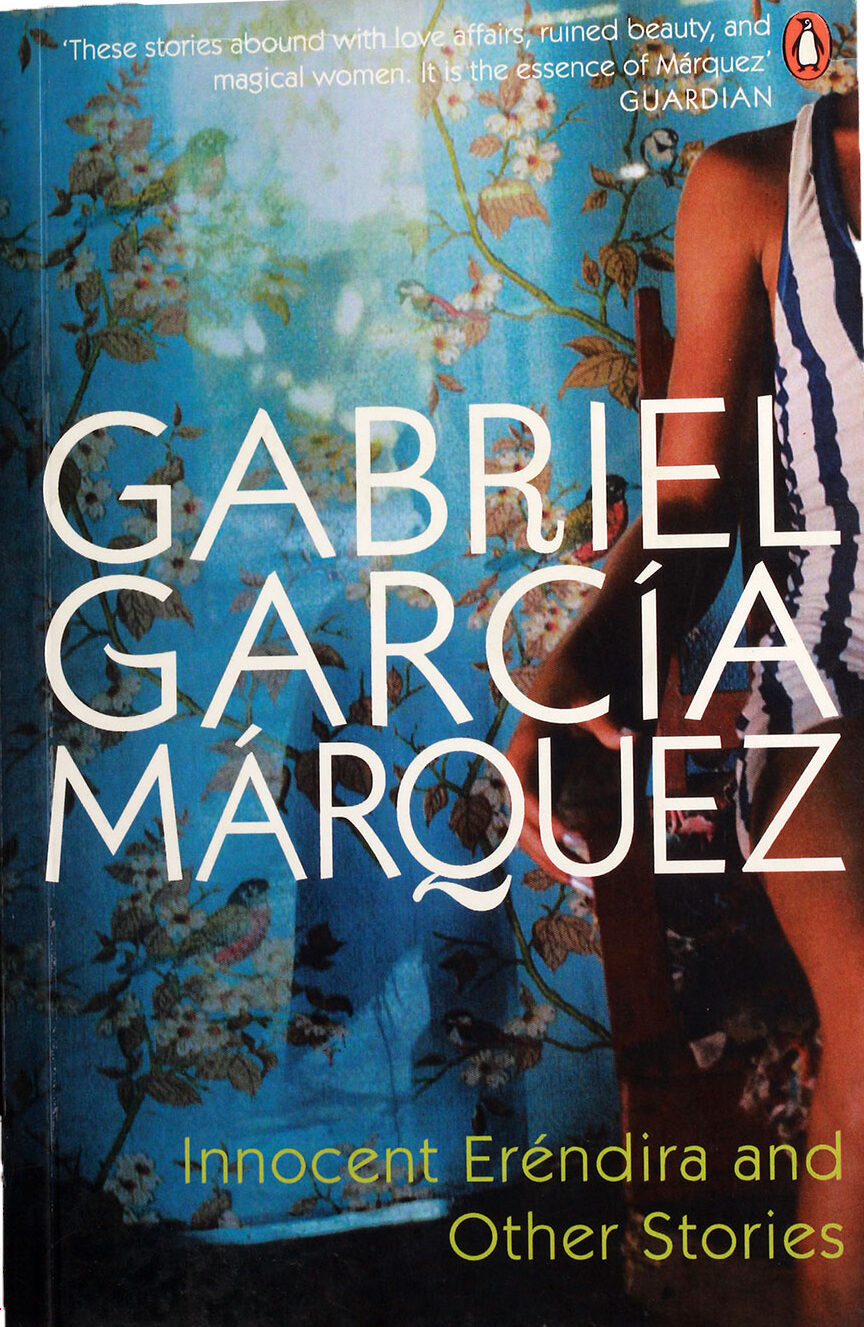
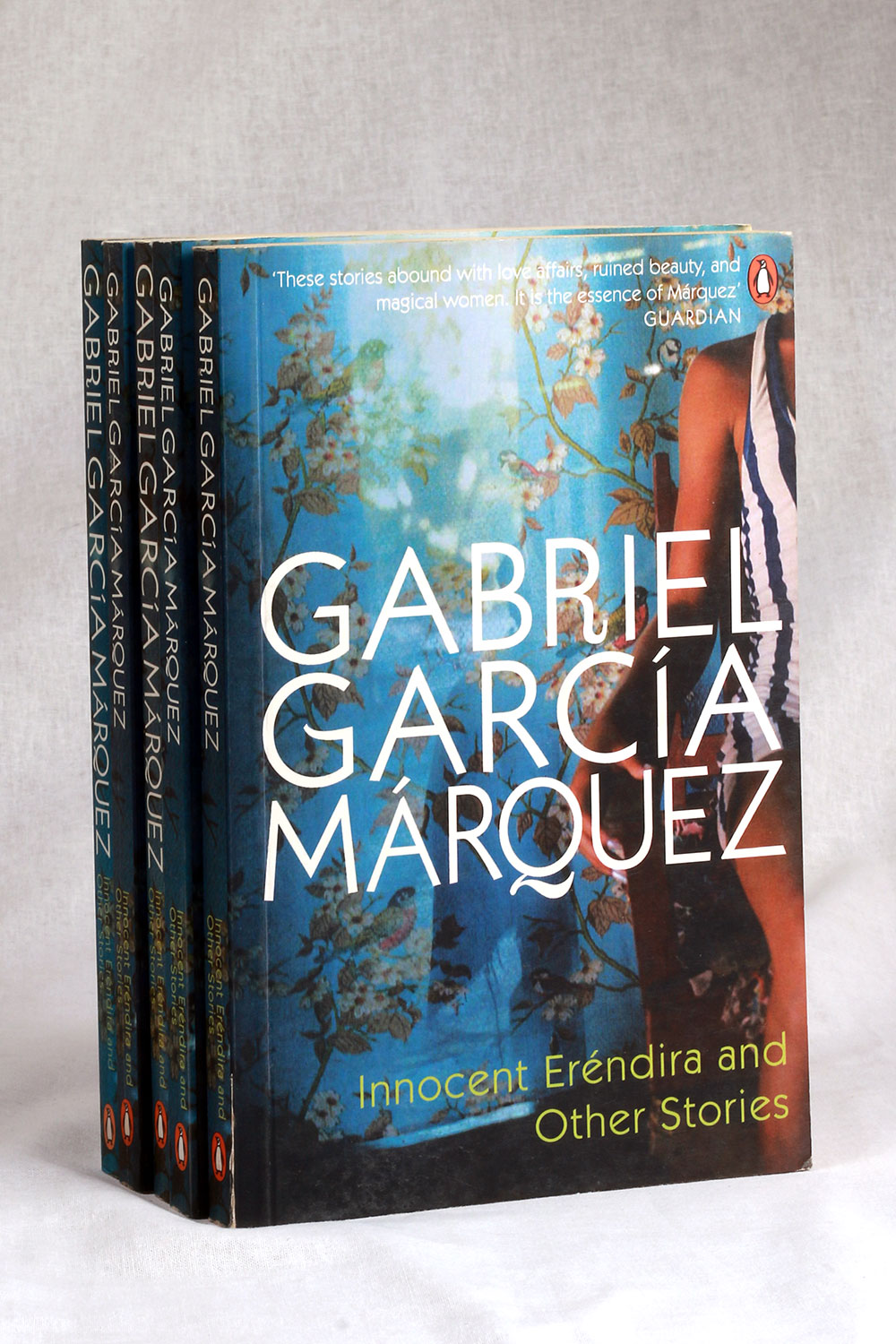


Innocent Erendira and Other Stories | Gabriel García Márquez
₨ 478.00 ₨ 335.00
This collection of fiction, representing some of García Márquez’s earlier work, includes eleven short stories and a novella, Innocent Eréndira, in which a young girl who dreams of freedom cannot escape the reach of her vicious and avaricious grandmother.
5 in stock
“The stories are rich and startling in their matter and confident in their manner….They are–the word cannot be avoided–magical.”–John Updike, The New Yorker
This collection of fiction, representing some of García Márquez’s earlier work, includes eleven short stories and a novella, Innocent Eréndira, in which a young girl who dreams of freedom cannot escape the reach of her vicious and avaricious grandmother.
“García Márquez’s fictional universe has the same staggeringly gratifying density and texture as Proust’s Faubourg Saint-Germain and Joyce’s Dublin….Arguably the best of the Latin Americans.”–Martin Kaplan, The New Republic
“It is the genius of the mature García Márquez that fatalism and possibility somehow coexist, that dreams redeem, that there is laughter even in death.’–John Leonard, New York Times
Related products

The Art of War, an ancient Chinese text dating from the Spring and Autumn period of the fifth century BC., is a military treatise attributed to the military strategist, Sun Tzu, also called Sunzi. Each of the thirteen chapters discusses a different aspect of warfare and how it applies to military strategy and tactics. For nearly 1,500 years, it was the lead text in an anthology, which in 1080 became known as Seven Military Classics by the Emperor Shenzong of Song.
Publisher : FP

The Motorcycle Diaries is a story which revolves around 2 men who embark on a road journey on a 1939 Norton 500cc cylinder motorcycle from Buenos Aires. They are out to discover and explore South America. This book had been written 8 years prior to the Cuban Revolution. The person who wrote the memoirs of this journey was one of those 2 bikers, Ernesto Guevara. He focused on the injustices that were prevalent at that time in South America.

Jotiba Phule’s Fight for Liberty
Story: Srividya Natarajan
Art: Aparajita Ninan
In 1873, Jotirao Govindrao Phule wrote Gulamgiri (Slavery), a scathing, witty attack on the Vedas as idle fantasies of the brahman mind which enslaved the shudras and atishudras. A hundred and forty years hence, Srividya Natarajan and Aparajita Ninan breathe fresh life into Phule’s graphic imagination, weaving in the story of Savitribai, Jotiba’s partner in his struggles.
In today’s climate of intolerance, here’s a manifesto of resistance—Phule setting the dynamite of thought to the scriptures and ideas Hindus hold dear.

This book made history. It wasn’t banned, not quite, when it first appeared in 1984, but its disappearance was cleverly managed so that few got to read the only authentic account of how a protected kingdom became India’s twenty-second state. As the Hon. David Astor, editor of The Observer in London, wrote, Sunanda K. Datta-Ray was ‘alone in witnessing and communicating the essential story’. He had to surmount many obstacles and incur severe disapproval to do so. Nearly thirty years later, a revised edition with the author’s long new introduction reads like an exciting thriller. Rich with dances and durbars, lamaist rituals, intrigue and espionage, it brings vividly to life the dramatis personae of this Himalayan drama—Sikkim’s sad last king, Chogyal Palden Thondup Namgyal, and his vivacious American queen, Hope Cooke; bumbling Kazi Lendhup Dorji and his scheming Kazini, whose nationality and even her name were shrouded in mystery, and who played into the hands of more powerful strategists. Citing documents that have not been seen by any other writer, the book analyses law and politics with masterly skill to recreate the Sikkim saga against the background of a twentieth-century Great Game involving India and China. Smash and Grab: Annexation of Sikkim didn’t only make history. It is history.
Reviews
There are no reviews yet.