
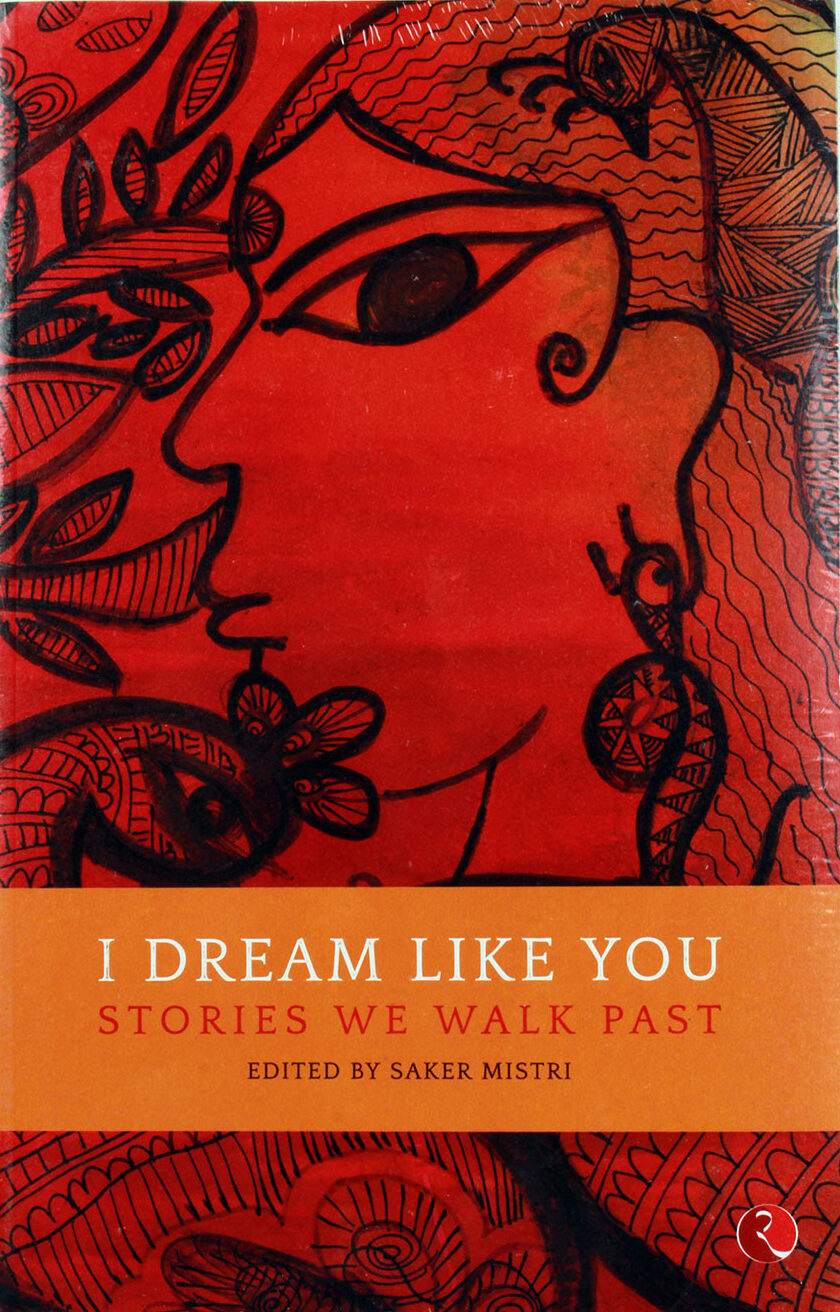
I Dream Like You: Stories We Walk Past | Saker Mistri
₨ 632.00 ₨ 443.00
Their dreams were not too different from ours. Each one achieved success—school principal, poet, police constable, chartered accountant and social entrepreneur. But the road was long, the hurdles seemingly unpassable. The real-life narratives of the twenty-five young writers in this book reveal the bridges they built between the slum communities they were born in and the world outside.
These are stories we walk past, faces we don’t stop to notice. These voices show a maturity beyond their years, reminding us that honesty, courage, success and compassion are in each one of us if we are given the right opportunities to develop them.
1 in stock
Their dreams were not too different from ours. Each one achieved success—school principal, poet, police constable, chartered accountant and social entrepreneur. But the road was long, the hurdles seemingly unpassable. The real-life narratives of the twenty-five young writers in this book reveal the bridges they built between the slum communities they were born in and the world outside.
These are stories we walk past, faces we don’t stop to notice. These voices show a maturity beyond their years, reminding us that honesty, courage, success and compassion are in each one of us if we are given the right opportunities to develop them.
Related products

The Motorcycle Diaries is a story which revolves around 2 men who embark on a road journey on a 1939 Norton 500cc cylinder motorcycle from Buenos Aires. They are out to discover and explore South America. This book had been written 8 years prior to the Cuban Revolution. The person who wrote the memoirs of this journey was one of those 2 bikers, Ernesto Guevara. He focused on the injustices that were prevalent at that time in South America.

Trotsky’s theory of the permanent revolution is one of the most important additions to the arsenal of marxism. It was first developed by Trotsky in 1904, on the eve of the first Russian Revolution. At that time, all the tendencies of the Russian Social Democracy had the perspective of a bourgeois democratic revolution. Trotsky alone in 1905 put forward the idea that the Russian working class could come to power before the workers of Western Europe. The correctness of Trotsky’s theory was brilliantly demonstrated in 1917, when the Bolshevik Party under Lenin and Trotsky led the Russian proletariat to power in the first workers state in the world.
However, after the death of Lenin in 1924, the theory of the permanent revolution was subject to a vitriolic onslaught by the stalinist bureaucracy, which had in effect renounced world revolution in favour of “socialism in one country”. The attack on the theory came to epitomise the struggle against “Trotskyism”. Today, however, with the collapse of Stalinism (and with it “socialism in one country”), Trotsky’s theory of the permanent revolution has become more relevant than ever.
Publisher : Aakar Publications

Translated from the Hindi by Madhu Singh With a foreword by Angela Y. Davis
September 1970. Ramchandra Singh enters the Hardoi District Jail in Uttar Pradesh as a naxalite undertrial. Barely twenty, his life of expanding prospects—in studies, politics and love—is reduced to the horizon of a life term. The odds are stacked against the survival of his humanity and imagination, but Singh regenerates his gifts of empathy, humour, reflection and, above all, language—in a secret diary smuggled out with the help of friends.
A singular record of recent history and of individual witness, Singh’s prison diary, newly expanded, appears in English for the first time. Offering unprecedented intimacy with the everyday life of the imprisoned everyman, Singh challenges us to look without flinching and question our assumptions about crime and punishment.
Ramchandra Singh (1949–2018), of Bangarmau village in Unnao district of Uttar Pradesh, was a member of the Communist Party of India (Marxist–Leninist) Red Star, and served on its Central Committee. He was part of the editorial board of Red Star Monthly (Hindi). He passed away when this book was in press.
Madhu Singh is a professor in the Department of English and Modern European Languages, University of Lucknow. She has previously translated the scholar G.N. Devy’s work, A Nomad Called Thief, into Hindi as Ghumantu Hain Chor Nahin.

Poems selected and translated from Marathi by Dilip Chitre
Namdeo Dhasal tr. Dilip Chitre
‘This is Mumbai without her makeup, her botox, her power yoga; the Mumbai that seethes, unruly, menacing, yet vitally alive’—The Hindu
‘This elegant book is a journey through the bowels of those quarters over which we have constructed robust mental flyovers’—The Sunday Times of India
‘Chitre succeeds in reproducing the images and metaphors of Dhasal’s work, and his unmistakable, hard-hitting voice’—Outlook
‘Dhasal employs an aesthetic of fracture… towards writing into existence the continuing alienation of dalits seduced by the shiny assurances of a still-new nation’—Biblio: A Review of Books
Reviews
There are no reviews yet.