
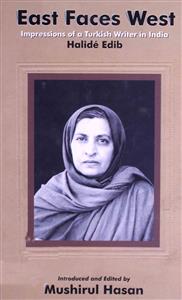
We are introducing a new voice to the existing debates, the voice of Halidé Edib, who played such a critical role in defining Turkish identity in a colonial context. We re-issue The Conflict of East and West in Turkey with notes on major events and personalities.
In the eight lectures delivered at Jamia, Halidé Edib expounds the idea of the East and West with utmost clarity. Her intervention evoked responses from, among others, Mahatma Gandhi, Bhagwan Das, M.A. Ansari and Mohammad Iqbal.
Related products

A brief, clear, and faithful exposition of Marx’s major premises, with particular attention to historical context.
Author : Ernst Fischer

Jotiba Phule’s Fight for Liberty
Story: Srividya Natarajan
Art: Aparajita Ninan
In 1873, Jotirao Govindrao Phule wrote Gulamgiri (Slavery), a scathing, witty attack on the Vedas as idle fantasies of the brahman mind which enslaved the shudras and atishudras. A hundred and forty years hence, Srividya Natarajan and Aparajita Ninan breathe fresh life into Phule’s graphic imagination, weaving in the story of Savitribai, Jotiba’s partner in his struggles.
In today’s climate of intolerance, here’s a manifesto of resistance—Phule setting the dynamite of thought to the scriptures and ideas Hindus hold dear.

Ed. Salim Yusufji With an introduction by Bama
This book is an attempt at intimacy with B.R. Ambedkar in his hours away from history and headlines. The aim here is to recover the ephemera that attended Ambedkar’s life and died with him—his pleasure in his library and book-collecting, his vein of gruff humour, the sensation of seeing him in the flesh for the first time, or of stepping out of a summer storm into his house and hearing him at practice on his violin. Here, we have his attendants, admirers and companions speak of Ambedkar’s love of the sherwani, kurta, lungi, dhoti, and even his sudden paean to elasticated underpants. We meet Ambedkar the lover of dogs and outsize fountain pens, proponent of sex education and contraception, anti-prohibitionist teetotaler and occasional cook.
The fragments that make up this volume enable the recovery of his many facets—a rewarding biographical quest.

Purple Hibiscus is set in postcolonial Nigeria, a country beset by political instability and economic difficulties. The central character is Kambili Achike, aged fifteen for much of the period covered by the book, a member of a wealthy family dominated by her devoutly Catholic father, Eugene. Eugene is both a religious zealot and a violent figure in the Achike household, subjecting his wife Beatrice, Kambili herself, and her brother Jaja to beatings and psychological cruelty.
The story is told through Kambili’s eyes and is essentially about the disintegration of her family unit and her struggle to grow to maturity. A key period is the time Kambili and her brother spend at the house of her father’s sister, Ifeoma, and her three children. This household offers a marked contrast to what Kambili and Jaja are used to. It practices a completely different form of Catholicism, making for a happy, liberal place that encourages its members to speak their minds. In this nurturing environment, both Kambili and Jaja become more open and more able to voice their own opinions. While at Aunty Ifeoma’s, Kambili also falls in love with a young priest, Father Amadi, which awakens her sense of her own sexuality.
Purple Hibiscus is an exquisite novel about the emotional turmoil of adolescence, the powerful bonds of family, and the bright promise of freedom.
Reviews
There are no reviews yet.